| |
 |
|
 |
| |
|

The FANTA-2 web site is made
possible through the support provided by the U.S. Agency for
International Development (USAID) under terms of the cooperative
agreement GHN-A-00-08-00001-00 awarded to the Academy for
Educational Development (AED). The information provided on
this web site is not official U.S. Government information
and does not represent the views or positions of USAID or
the U.S. Government.
EMPLOYMENT LISTINGS
Health/Nutrition Survey Specialist
Senior CMAM and Emergency Nutrition Specialist |
|
 |
 |
|
 |
 |
|
Indicators for Assessing Infant and Young Child Feeding Practices Series
As the culmination of a World Health Organization (WHO)-led effort to develop and reach consensus on a set of simple, valid and reliable infant and young child feeding (IYCF) indicators, this publication series describes and provides guidance for collection of eight core and seven optional IYCF indicators that can be assessed in population-based surveys, including the Demographic and Health Survey (DHS), Multiple Indicator Cluster Survey (MICS) and Knowledge, Practice, Coverage Survey (KPC).
Both Part II Measurements and Part III Country Profiles were recently released. Part II Measurements provides the tools for data collection and calculation of the IYCF indicators. The document is intended for use by managers of population-based surveys that collect information on feeding practices among infants and young children less that two years of age. Part III Country Profiles presents values for the IYCF indicators for 46 countries, using DHS data collected between 2002 and 2008.
Learn more about series
Validation of a Measure of Household Hunger for Cross-Cultural Use
This report describes the findings from a study carried out by FANTA-2 in partnership with FAO and Tufts University. The aim of the study was to evaluate the internal, external and cross-cultural validity of the Household Food Insecurity Access Scale (HFIAS), a 9 item 4 frequency measurement scale to assess the access component of household food insecurity in resource-poor areas. Statistical methods based on the Rasch measurement model were used to assess the validity of HFIAS data collected in seven diverse contexts: Mozambique (2 datasets), Malawi, West Bank/Gaza Strip, Kenya, Zimbabwe, South Africa. The results of these analyses were then used to revise the HFIAS, as necessary.
This report was funded by USAID’s Office of Health, Infectious Disease and Nutrition (HIDN) in the Bureau for Global Health. Financial support from the European Commission (EC) through the EC-FAO programme on linking information and decision-making to improve food security (www.foodsec.org) and Tufts University is gratefully acknowledged.
Learn more about the report
Guide to Screening for Food and Nutrition Services Among Adolescents and Adults Living with HIV
The relationship between HIV and nutrition is bidirectional and multifaceted. HIV can cause or worsen malnutrition due to increased energy requirements, reduced food intake and poor nutrient absorption. Malnutrition, in turn, further weakens the immune system, increasing susceptibility to infections and worsening the disease’s impact. Among those in antiretroviral therapy, poor diet may also increase digestive track and metabolic-adverse reactions, reducing treatment adherence and increasing morbidity.
Recognizing the important role food and nutrition play in comprehensive care of people living with HIV (PLHIV), countries and programs are increasingly integrating food and nutrition services into HIV care and treatment programs. As HIV care and treatment programs scale up food and nutrition services among PLHIV, implementing agencies have expressed the need for guidance on how to screen PLHIV who need food and nutrition services. The Guide to Screening for Food and Nutrition Services Among Adolescents and Adults Living with HIV provides direction on how to screen HIV-infected older adolescents and adults who need food and nutrition services.
Download the Report
The Nutrition Program Design Assistant: A Tool for Program Planners (NPDA)
This two-part tool was developed by the CORE Nutrition Working Group, in collaboration with FANTA-2/AED and Save the Children, to help nutrition program planning teams design community-based nutrition programs. A simple Reference Guide and Workbook, the NPDA is best used in collaboration with a range of partners, including ministry staff, community leaders and representatives and local organizations.
The publication provides a framework for programmers to analyze the nutrition situation and offers guidance for design teams to choose the most appropriate nutrition approaches based on the specific context and need. The NPDA Workbook is a place to record data, decisions, and decision-making rationale. The NPDA Reference Guide provides guidance on analyzing the nutrition situation, establishing objectives, and selecting a combination of approaches to suit the local nutrition situation and the program's resources and objectives.
The tool also helps programmers avoid an approach that would be inappropriate or ineffective in the specific context. Guidance in the NPDA is based on the collective experience of over 40 nutrition experts and practitioners from the NGO, technical assistance, and donor communities. The generous financial and technical support from the Bureau for Global Health of USAID is gratefully acknowledged.
Download the NPDA Reference Guide and Workbook from the CORE Group website (note: you can not access this webpage with the IE6 browser)
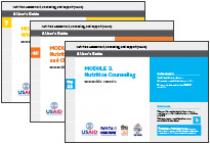
Integration of IYCF into CMAM Training Materials
The Nutrition, Policy Practice Group of the Emergency Nutrition Network (ENN), in consultation with IFE Core Group members and collaborators and funded by the Inter-Agency Standing Committee (IASC) Nutrition Cluster, have published Integration of IYCF into CMAM. The materials train health care personnel and community health workers in the integration of recommended infant and young child feeding (IYCF) practices within community-based management of acute malnutrition (CMAM), to support mothers/caregivers in prevention as well as rehabilitation of severe acute malnutrition (SAM).
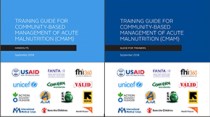
The materials integrate well and should be used when using FANTA-2's Training Guide for Community-Based Management of Acute Malnutrition (CMAM).
The Facilitator's Guide is designed for health care providers who manage or supervise the management of SAM in children. It will also be useful for government officials in the Ministry of Health (MOH) and at the district level, health programme managers and technical staff of non-governmental organisations (NGOs) and United Nations (UN) agencies.
The material comprises Facilitator's Guide and Handouts, in both US and UK print ready versions. It is available from the ENN on CD or to download from the ENN website (www.ennonline.net/resources).
PM2A: Title II Preventing Malnutrition In Children Under Two Approach
and the Title II Technical Reference Materials, Version 1.1, March 2010
PM2A is a food-assisted approach to reducing the prevalence of child malnutrition by targeting a package of health and nutrition interventions to all pregnant women, mothers of children 0-23 months and children under 2 in food-insecure program areas, regardless of nutritional status. Because these women and children are the most nutritionally vulnerable members of the population, the program targets everyone in these groups to protect children from malnutrition and its long-term consequences, such as diminished psycho-motor skills, work capacity and income.
PM2A integrates best practices in maternal and child health and nutrition (MCHN) programming and combines them with food assistance. The core PM2A services provided to participants are: conditional food ration for the individual woman or children and their household; preventive and curative health and nutrition services; behavior change communication.
USAID Office of Food for Peace's Technical Reference Materials (TRM) on PM2A provides guidance for current and potential MYAP Awardees and is based on current program knowledge and experience. Version 1.1, released in March 2010, is an update to version 1 (October 2009). It has been re-organized, contains more summary charts and tables, and includes an additional brief discussion of Moderate Acute Malnutrition.
Download the TRM on PM2A
Access the background documents for PM2A

Dietary Diversity as a Measure of the Micronutrient Adequacy of Women’s Diets in Resource-Poor Areas: Results from Five Countries
In resource-poor environments across the globe, low-quality monotonous diets are the norm and the risk for micronutrient deficiencies is high. Women of reproductive age are among those most likely to suffer from micronutrient deficiencies, yet in developing countries there are very little data on women’s micronutrient status and the quality of women’s diets. Simple indicators are needed to characterize diet quality, assess key diet problems and monitor and evaluate intervention programs. While there have been attempts to design indicators of diet quality for women, the lack of uniformity in approaches has impeded progress.
In 2006, FANTA formed the Women’s Dietary Diversity Project (WDDP), a collaborative research initiative with the broad objective to use existing data sets with dietary intake data from 24-hour recall to analyze the relationship between simple indicators of diet diversity–such as those that could be derived from the Demographic and Health Surveys–and the micronutrient adequacy of women’s diets. With funding through the United States Agency for International Development Bureau for Global Health Office of Health, Infectious Disease and Nutrition, the WDDP has analyzed data sets from five countries: Bangladesh, Burkina Faso, Mali, Mozambique and the Philippines.
Download
the reports
Randomized, Double-Blind Controlled Clinical Effectiveness Trial Comparing a Novel 10% Milk Ready-to-Use Therapeutic Food with the Standard 25% Milk Ready-to-Use Therapeutic Food in the Treatment of Severe Acute Malnutrition in Rural Malawian Children
Standard therapy for cases of severe acute malnutrition without complications is home-based therapy with milk-peanut based ready-to-use-therapeutic food (RUTF). However, the cost of ingredients in RUTF limits its availability in resource-poor countries, with powdered milk constituting 67 percent of the cost. In this clinical effectiveness trial, severely malnourished children were given either a reduced milk formulation of RUTF (10 percent milk) in which milk was replaced with soy protein, or the standard formulation of RUTF (25 percent milk). Overall, children who received the 10 percent milk formulation had slower rates of weight gain and slower mid-upper arm circumference (MUAC) gain. Treating severely malnourished children with a 10 percent milk RUTF results in a lower rate of recovery and slower growth rates when compared to the standard 25 percent milk RUTF.
The clinical effectiveness trial was funded by the Hickey Family Foundation with additional support from USAID's Bureau for Global Health's Office of Health, Infectious Disease and Nutrition.
Download
the report
Use of Lipid-based Nutrient Supplements (LNS) to Improve the Nutrient Adequacy of General Food Distribution Rations for Vulnerable Sub-groups in Emergency Settings
With co-funding from the Inter-Agency Standing Committee (IASC) Global Nutrition Cluster (GNC), FANTA-2 and UC Davis produced Use of Lipid-based Nutrient Supplements (LNS) to Improve the Nutrient Adequacy of General Food Distribution Rations for Vulnerable Sub-groups in Emergency Settings. The report is available from the UC Davis website. The report describes the potential role of LNS in improving the nutritional quality of foods provided in emergency settings and the optimal formulation of LNS for various target groups (e.g., infants and young children, pregnant and lactating women) in this context. The report will be published as a supplement in Maternal and Child Nutrition in 2010.
Review of Kenya’s Food by Prescription Program
Food and nutrition services are an important component of comprehensive HIV care aimed at improving the quality of life, productivity and survival of people living with HIV (PLHIV). Food by Prescription is an approach for integrating food and nutrition services into clinical HIV care and treatment services, and PEPFAR is supporting Food by Prescription programs in a growing number of countries. The first Food by Prescription program was implemented in Kenya beginning in 2006, and examination of the initial Kenya program can help inform the design and implementation of Food by Prescription in Kenya and other countries.
The Review of Kenya’s Food by Prescription Programme examines the operation and effectiveness of the program with a focus on specific issues such as the duration of food supplementation, loss to follow-up among clients, changes in client nutritional status and the food delivery system.
Download
the report
Alternative Sampling Designs for Emergency Settings: A Guide for Survey Planning, Data Collection and Analysis
In emergency settings, rapid but statistically reliable population-based surveys are needed to provide humanitarian organizations and government agencies with essential information on the severity and magnitude of the situation so that appropriate analysis and response planning takes place. The most common method used in emergencies is a two-stage 30x30 cluster survey. This method provides reliable population-level estimates, but is time-and resource-intensive.
The guide provides information on three alternative sampling designs that are proven to be more time-and resource-efficient than the 30x30 cluster survey: the 33x6, the 67x3 and the sequential design. All three designs are hybrid designs, combining aspects of cluster sampling and analysis, with lot quality assurance sampling (LQAS) analysis.
Download
the report
The FANTA-2 Project web site is made possible through
the support provided by the U.S. Agency for International Development
(USAID) under terms of the cooperative agreement GHN-A-00-08-00001-00
awarded to the Academy for Educational Development (AED). The information
provided on this web site is not official U.S. Government information
and does not represent the views or positions of USAID or the U.S.
Government.

|